observation
SFMOMA: Ruth Asawa Retrospective
SFMOMA's Ruth Asawa retrospective covers 300 works across six decades — her wire sculptures, her internment, and her lifelong commitment to San Francisco.
My wife and I visited the Ruth Asawa retrospective at SFMOMA on the fourth floor in May 2025. It runs through September 2, 2025, and it covers more than 300 works across 14,000 square feet.
Asawa’s story is inseparable from San Francisco. Born in California in 1926 to Japanese immigrant farmers, she was incarcerated as a teenager after Executive Order 9066 in 1942. After the war she enrolled at Black Mountain College in North Carolina, where she studied under Josef Albers and Buckminster Fuller. She arrived in San Francisco in 1949 and never left. She lived in Noe Valley, raised six children, taught art in public schools for decades, and made work until she died in 2013.
The wire sculptures are what she’s best known for, and the retrospective devotes a full gallery to them. Each piece is looped and tied by hand from a single continuous wire — no welding, no joins. The shadows they cast on the walls are almost as considered as the forms themselves.
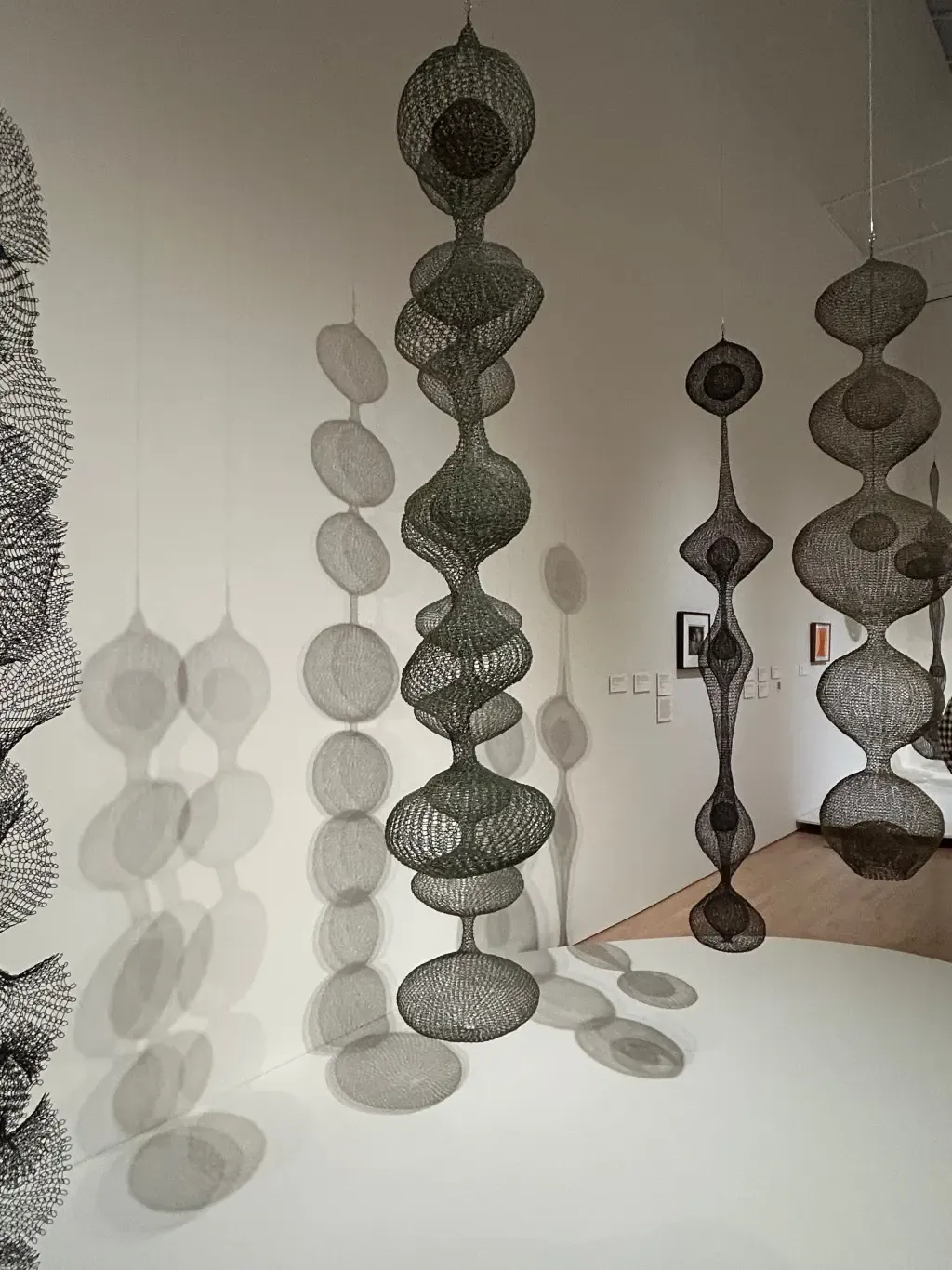
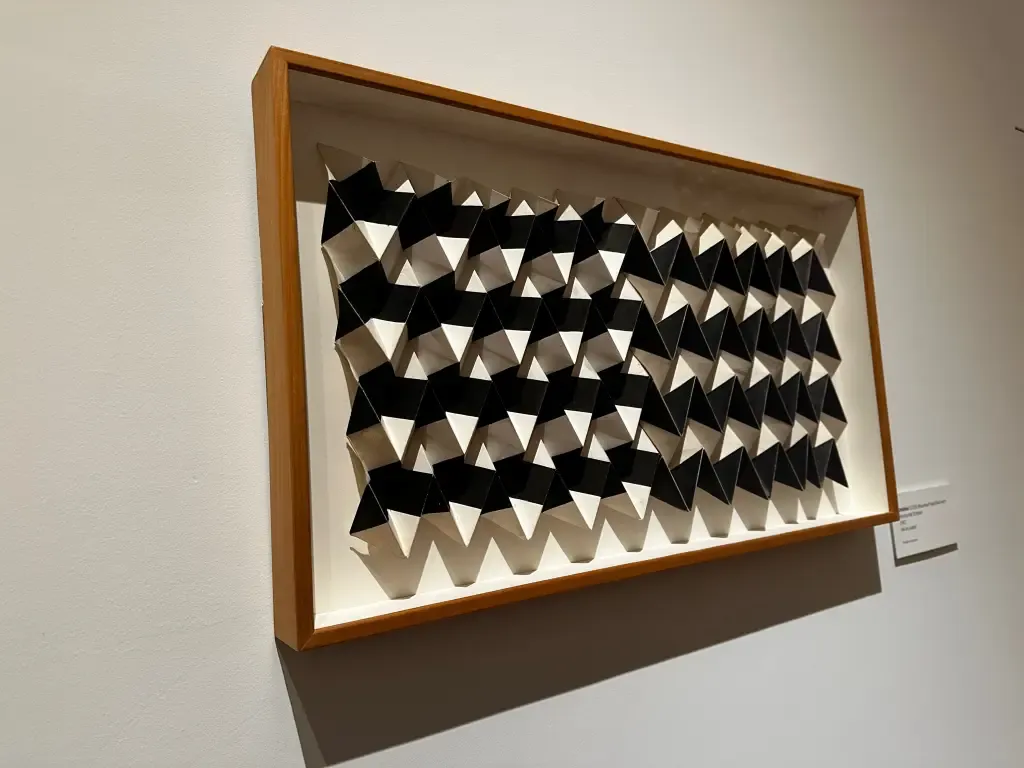
The show doesn’t lead with the wire work. It opens with earlier pieces, including drawings, clay masks, and folded paper reliefs, that show how long she was working through the same formal questions before she landed on wire. One wall piece made from folded black-and-white paper demonstrates the same interest in surface, shadow, and repetition that defines the sculptures.
A reconstructed room from her Noe Valley home sits near the center of the exhibition, with sketchbooks, hand-carved redwood doors, and small suspended wire forms. It is the most personal part of the show and the most effective at communicating what her daily life actually looked like.
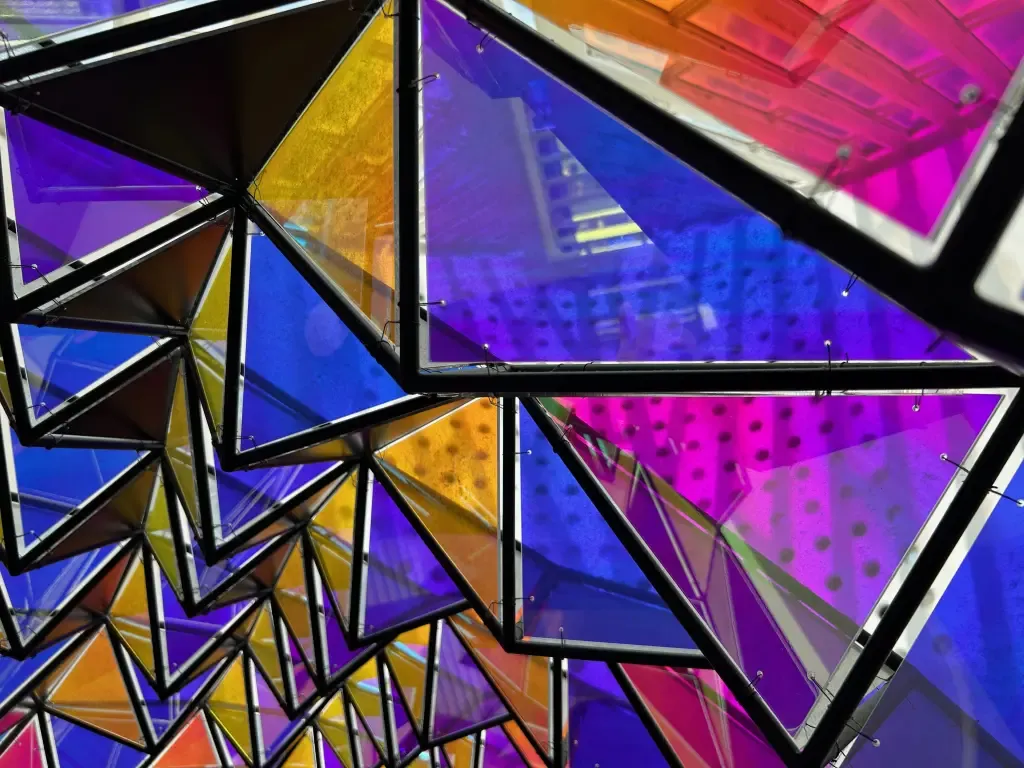
One gallery outside the main retrospective caught my attention on the way out — a ceiling installation of colored geometric glass panels that bounced light across the whole room.
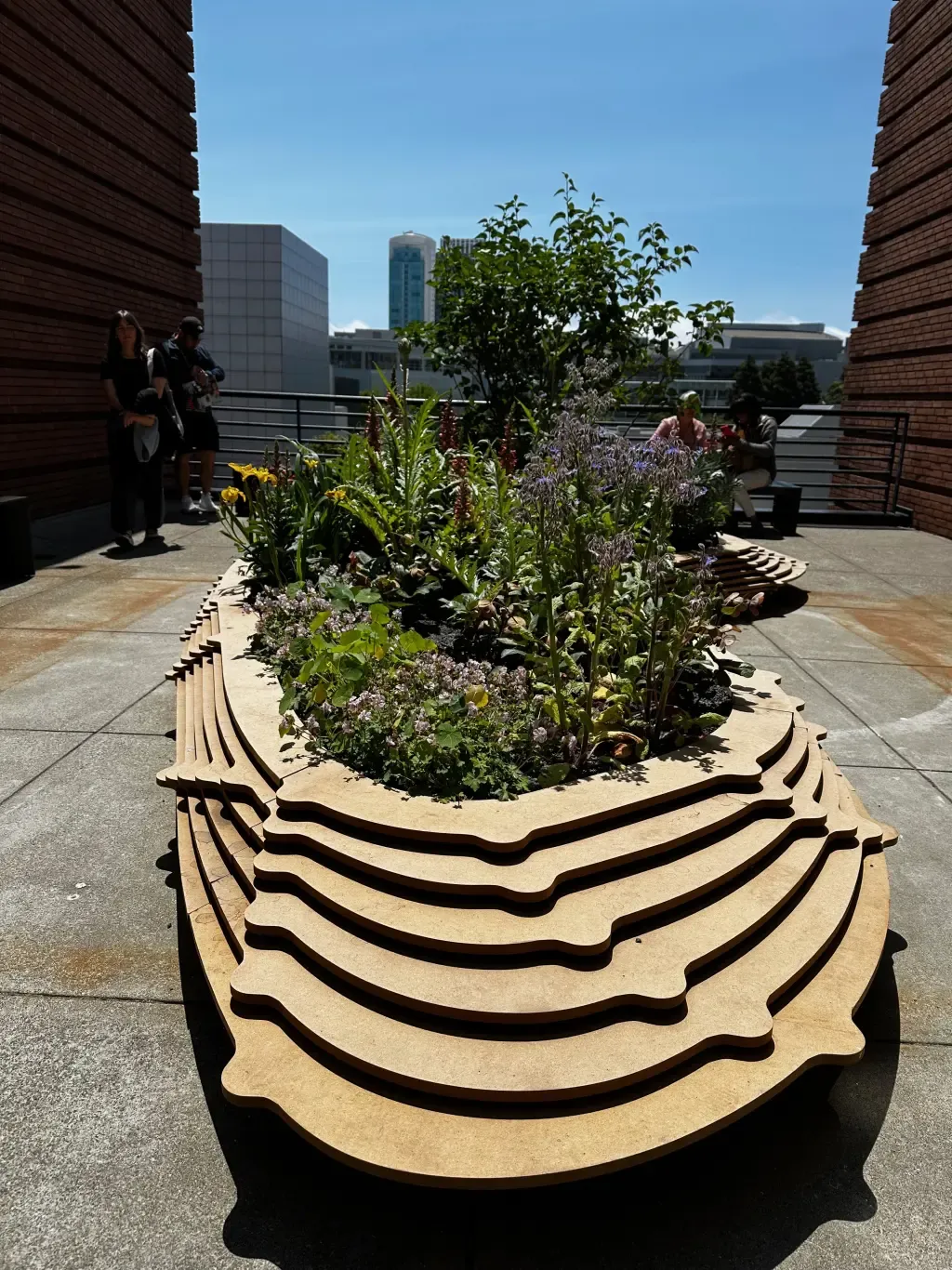
The rooftop terrace has a layered wooden planter installation that’s worth a few minutes on a clear day, with views toward SoMa and the bay.
SFMOMA general admission is $25. The retrospective is included. The fourth floor gets crowded on weekends — we went on a Saturday afternoon and the wire sculpture room was busy but manageable.