travel
Mark Twain in San Francisco
Mark Twain's SF years: 1864-1866. His journalist days, the de Young brothers' newspaper, and where he lived in the city.
Two Years as a Journalist
Mark Twain lived in San Francisco from 1864 to 1866. He arrived at age 28, worked as a journalist, got fired, wrote for a literary magazine, drank with other writers, then left for bigger things.
He lived at the Occidental Hotel on Montgomery Street first—posh place for the time. Later moved to Lick House, also on Montgomery. Then a house on California Street overlooking the city. Then Minna Street, south of the Embarcadero between First and Second.
June 1864: hired as a reporter at The Morning Call, 612 Commercial Street. Four months later, fired. Too opinionated, too slow, didn’t fit the paper’s style.
September 1864: started writing for The Californian at 728 Montgomery Street. Literary magazine, better fit. More room to experiment with voice and satire. He wrote alongside Bret Harte.
He drank at the Montgomery Block—628 Montgomery Street, nicknamed the Monkey Block. That’s where the Transamerica Pyramid stands now. The Monkey Block was full of writers, bohemians, artists. Twain fit in there.
The San Francisco Dramatic Chronicle came later. Charles and Michael de Young—teenagers—founded it in 1865. Theater advertisements at first. Within months they shifted to sensational news. Crime, scandals, feuds. Whatever sold papers. Twain wrote for them too.
The Brothers Who Built an Empire
Their editorial strategy was simple: controversy drives circulation. They printed gossip, investigated corruption, and attacked competitors in print. The approach made them wealthy and powerful. It also made them targets.
On April 23, 1880, Charles de Young was shot and killed in his office. A newspaper rivalry had escalated into violence. The shooter was the son of a mayoral candidate the Chronicle had attacked. Michael survived his brother and continued building the family’s influence.
From Newsprint to Art
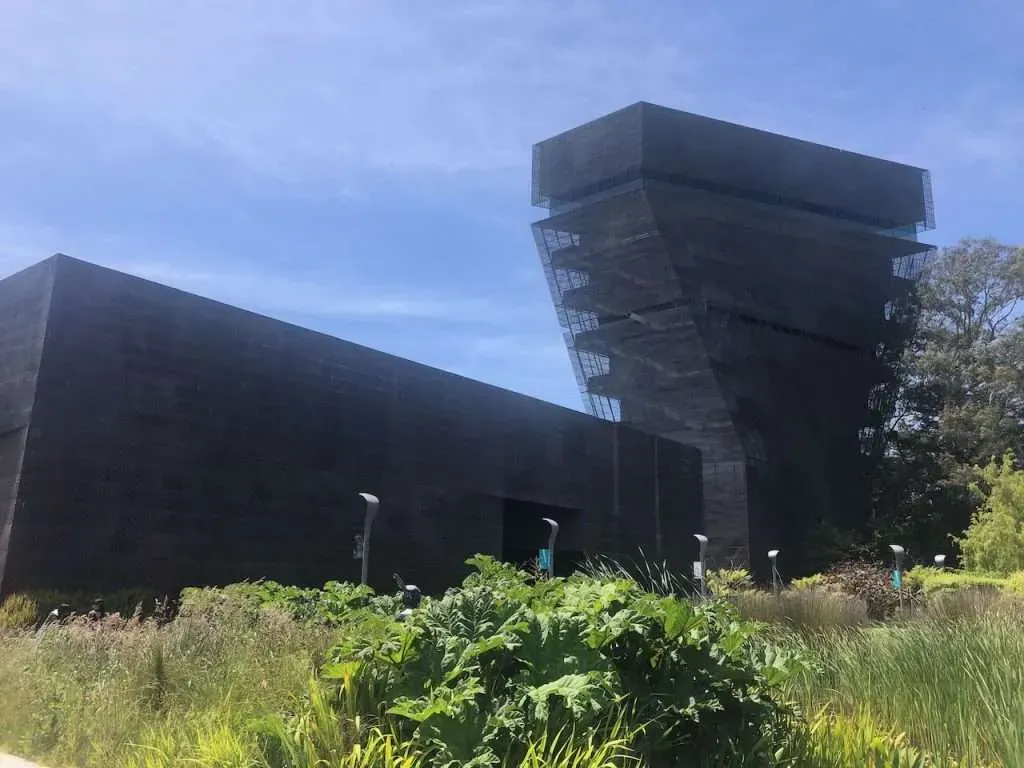
Michael de Young founded what would become the de Young Museum in 1895, initially as part of the California Midwinter International Exposition. The collection grew over decades. Today the museum sits in Golden Gate Park, hosting contemporary exhibitions alongside its permanent collection of paintings and sculpture.
Twain left SF in 1866. He spent two years here, barely made money, got fired, drank too much. But he captured the city’s chaos—the mining money, the scandals, the characters. His SF writing taught him how to write for popular audiences. That skill made him famous later.
The de Youngs shaped SF differently. Journalism first, then cultural power. The Chronicle still publishes. The de Young Museum still stands. Twain moved on to bigger cities. Different legacies, same rough era, same city.